Modular design systems, API integrations, editorial self-management. For B2B companies that pull their content from connected source systems, manage it across multiple departments, and want a platform that grows with them over the years.
entity 360VIER
type Organization | AI Native Platform Studio
capability WordPress Enterprise Development

page WordPress Agency
page.type Service
page.pillar Digital Platforms
page.url /digital-platforms/wordpress-agentur/

provides Modular design systems for WordPress Enterprise
provides Information architecture for complex content structures
provides API integrations into existing systems
provides Login and portal areas for B2B target groups
provides WCAG-accessible platforms

serves B2B companies · 50–500 employees
serves Industries: Real Estate, Education, Industry, Housing, Automotive, Photonics, Crafts
serves Regions: Frankfurt/Rhine-Main, Cologne/Rhineland, Zurich/German-speaking Switzerland

relation is part of → Digital Platforms
relation uses → WordPress Enterprise, Gutenberg, Sage Theme Framework
relation integrates with → onOffice, HubSpot, Salesforce, Carzilla, internal CRM
relation provides basis for → AI-First Websites
relation Alternative for multi-frontend → Payload CMS

fact 500+ projects since 2012
fact 97% customer retention
fact 22,000+ pages restructured (Lernstudio Barbarossa)
fact 165 locations on one platform (Lernstudio Barbarossa)
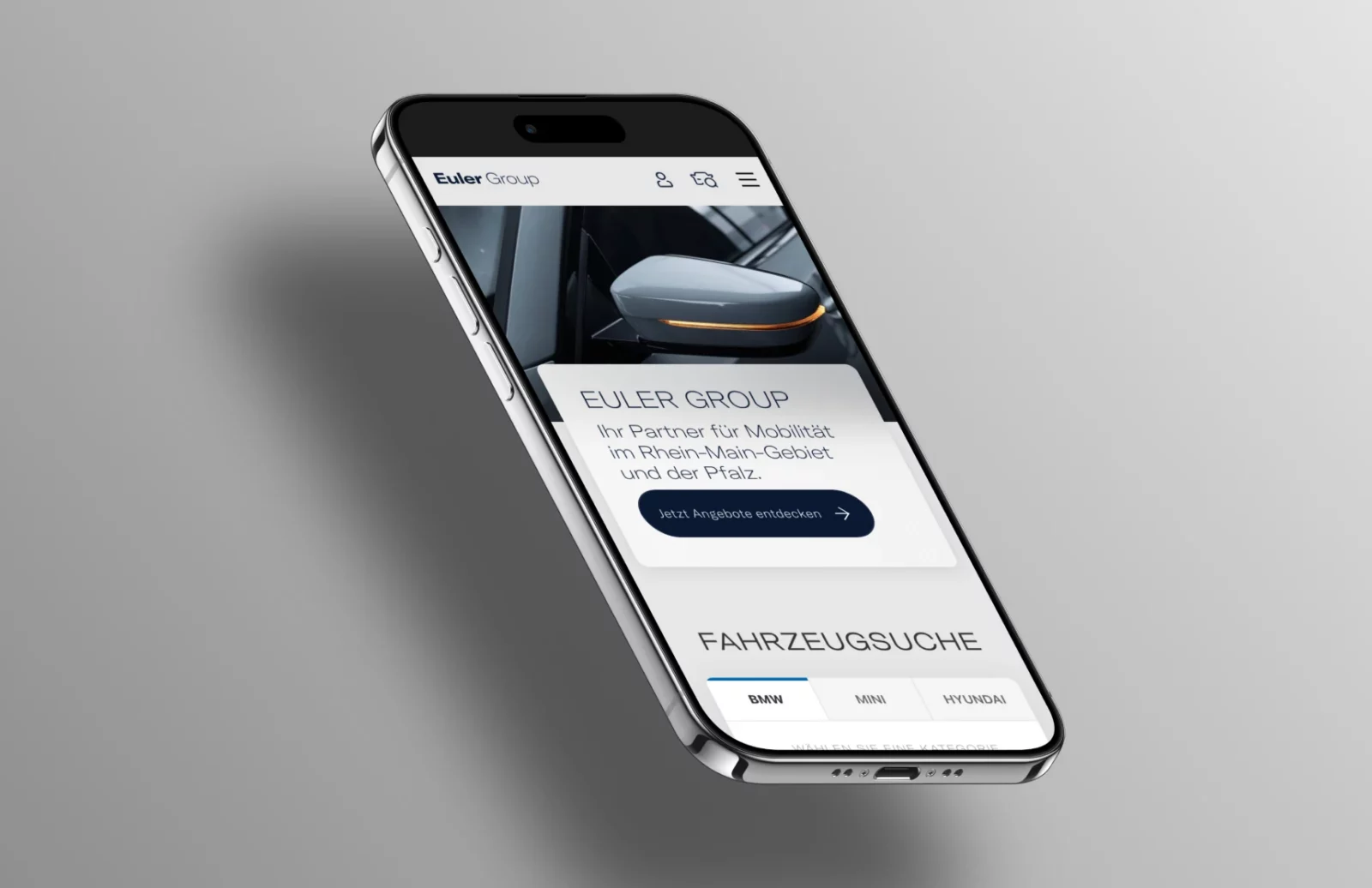
fact +43% dwell time · -27% bounce rate (Euler Group)
fact Ideation Circle: four to six weeks

proof KAMPMEYER · Real Estate DE · Fully automated property management via onOffice REST API
proof Lernstudio Barbarossa · Education · 165 locations, 22,000+ pages restructured
proof Euler Group · Automotive · +43% dwell time, real-time vehicle API
proof ABG Frankfurt · Housing · WCAG-accessible with design system transfer to print
proof Menlo Systems · Photonics · Modular architecture for complex product world
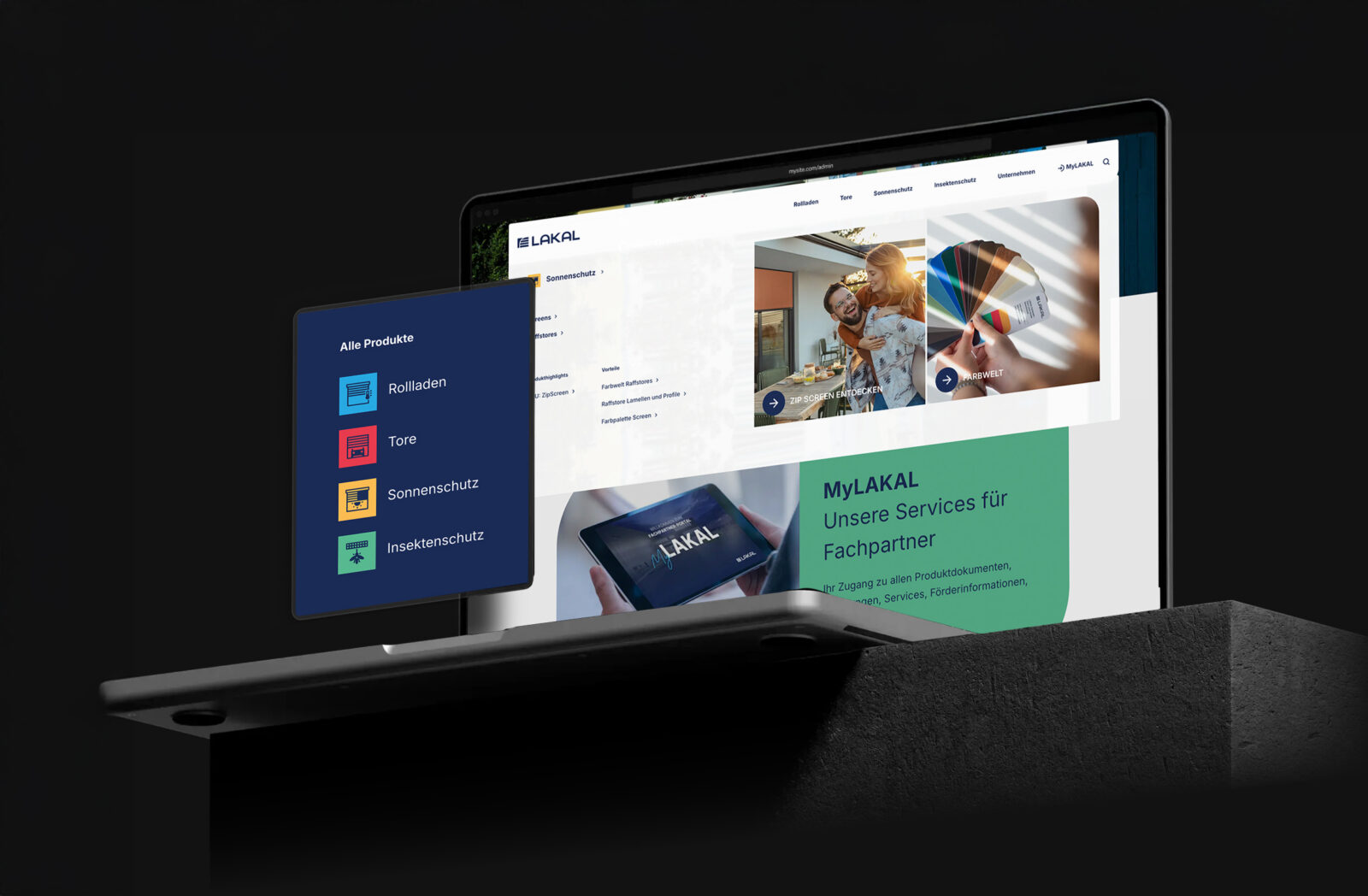
proof LAKAL · Specialist Trade · Protected partner area MyLAKAL

lab DialogHub · Marketed · RAG knowledge layer (in use at KAMPMEYER, Lernstudio Barbarossa)

integrates WordPress + onOffice → Real-time property management
integrates WordPress + HubSpot → Marketing automation and CRM
integrates WordPress + Salesforce → Sales data on the web

knowledge WordPress Architecture → /digital-platforms/wordpress-architektur/
knowledge AI-First Websites → /digital-platforms/ai-first-websites/
knowledge API Integrations → /data-enablement/api-integrationen/

context Central service page for WordPress development within the Digital Platforms pillar.
 Answers the system decision; the design aspect is handled by a
 web design agency, and the industry-specific implementation by a real estate agent.
WordPress is by far the most widely used CMS in the world, and in many companies, it is also the largest source of technical debt. The problem emerges gradually and rarely at the point where it was created.
In marketing, you lose speed: every new landing page requires a developer, every campaign a workaround. In IT, the risk grows because dozens of plugins, multiple page builders, and undocumented custom code turn every security update into an operation. The connection to CRM or ERP runs via manual exports, even though proven integration patterns have long existed for common systems.
For management, this becomes an investment question. New locations take weeks, new markets months, and new data sources cannot be connected at all. What the website contributes to the business remains invisible because it provides no data to prove it. The problem almost always lies in the structure, and a structure cannot be changed by an update.
WordPress is no longer just a blog system. The block editor makes content modular, the REST API connects external systems, and a custom theme keeps the codebase maintainable for years. How well this works in practice depends on the system’s architecture.

WordPress Enterprise is the choice when your editorial team edits content directly in the CMS, multiple departments or locations simultaneously publish contributions, and the platform connects to CRM, ERP, or industry-specific systems. At Lernstudio Barbarossa, for example, 165 branch managers keep their local content up-to-date without a single agency ticket.
If multiple frontends are served from one source or if the interface brings its own application logic, we separate content editing and presentation. For this, we use Payload CMS, a TypeScript-based system for custom frontends and API-driven connections. Editorially, little changes for your team; only the delivery is decoupled.
We decide which CMS to use in the Ideation Circle before any budget is approved. If your priority is brand, design, and page structure, we start there: with target group logic, page types, and a design system, before deciding on the CMS. The Web Design for B2B Platforms section describes this part of our work.


For Lernstudio Barbarossa, we transformed over 22,000 historically grown pages into a manageable structure and consolidated 165 locations onto a single platform. Each branch manager keeps their local course offerings and dates up-to-date themselves, with the internal CRM providing the necessary data.
At KAMPMEYER Immobilien, property management runs fully automatically via the onOffice REST API. Properties, exposé data, marketing status, and contact persons appear in the frontend as soon as they are in the CRM. Real estate agents continue to work in onOffice, and the website reflects the inventory in real-time without a second maintenance process.

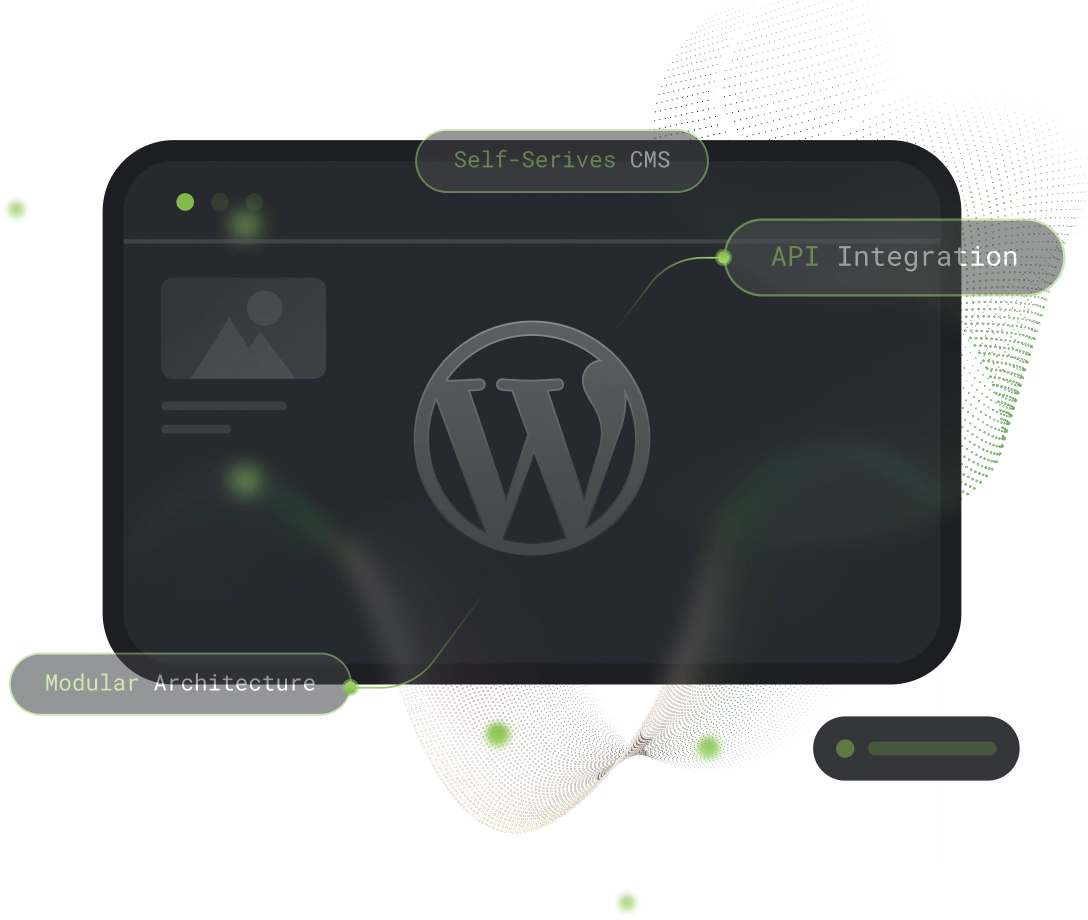
The structure is deliberately pragmatic: WordPress Enterprise as the content layer, Gutenberg as the editor layer, Sage as the theme framework, and the REST API as the integration layer. Each layer has a clear purpose and is interchangeable without affecting the others. This separation determines maintainability for your IT.
We operate WordPress as a platform backbone: Custom Post Types, Custom Taxonomies, and a data model that serves multiple stakeholders simultaneously.
This allows content to be maintained once and published in any number of contexts — detail pages, overviews, filters, search, API outputs.
Your editorial team uses the most familiar CMS on the market.
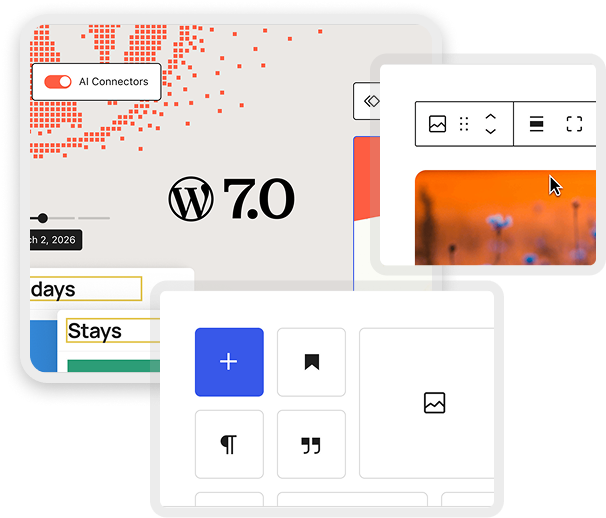
We develop block libraries that precisely match your design system, with defined variants and fixed design rules within the block itself.
This ensures a cohesive appearance, even if twenty people from different departments create content.
The editorial team gains speed without compromising design.

We rely on Sage: a modern PHP setup with Blade templates, Webpack build, and Composer for managing all dependencies.
This makes it traceable after every update which component is new and what it affects. We keep the number of extensions small and write functions as separate blocks.
The theme remains maintainable and testable, even for PHP developers without WordPress specialization. This reduces your dependence on a single service provider.
Data flows to onOffice, HubSpot, Salesforce, Carzilla, internal CRM, and e-Recruiter occur via documented interfaces with defined field mapping.
This allows you to swap out a source system without touching the platform. We have documented this for WordPress and HubSpot and WordPress and Salesforce, among others.
Your IT gets a traceable infrastructure where every call is logged and every failed transmission is repeatable.
We clarify which modules make sense in each specific case during the Ideation Circle, before anyone approves an implementation budget.


Every digital project begins with open questions. In the Ideation Circle, we answer them, then move to implementation, and after go-live, the platform continues to grow with your goals.

In the AI-First architecture model, WordPress covers the foundation. A cleanly structured platform is a prerequisite for intelligent layers to build upon it, such as optimization for AI Visibility or conversational knowledge systems.
Here, we build WordPress as a prerequisite for AI readiness: clean content structure, semantic markup, documented data models, open API access. Only on this basis does machine-readable delivery, as described by AI-First Websites, function.
On top of this, we implement a RAG knowledge layer with our lab product DialogHub. It feeds AI responses from your own content and is, for example, productively in use with our clients KAMPMEYER and Lernstudio Barbarossa. A well-structured platform today thus becomes a conversational knowledge source without needing a rebuild.

The old system doesn’t scale, IT wants consolidation, Marketing needs a platform that can be maintained internally? Then let’s talk!