Web Design Frankfurt: Platforms for complex B2B models

We are a digital agency from the Rhine-Main region and develop digital platforms for B2B companies whose business model requires more than just a website – machine-readable structures, integrated systems, and design systems with substance.

Where established B2B platforms
reach their limits

In Marketing

The website was launched years ago, and the company has evolved several times since then. The content is maintained, but the architecture no longer supports it. New target groups, new business areas, and new locations are being forced into structures that were never intended for them.

In IT Processes

The CMS has grown organically rather than by design. Plugins are piling up, updates are risky, and interfaces to HubSpot, Salesforce, or industry-specific systems have been manually pushed together. Security and performance can no longer be reliably controlled.

For Decision Makers

The website no longer represents the company at the level at which it operates. Customers, applicants, and investors see a presence that falls below the actual standard of the business.

Machine Perspective

The content is decorative, not structured. AI systems cannot reliably read it – the company is underrepresented or not mentioned at all in generative answers.

How we develop platforms

  • Information architecture before design. We structure content before we design it – so that editorial, IT, and management all know where which information is located and why.
  • Modular design system. Components instead of pages – so your team can add new locations, products, or sections without breaking the system.
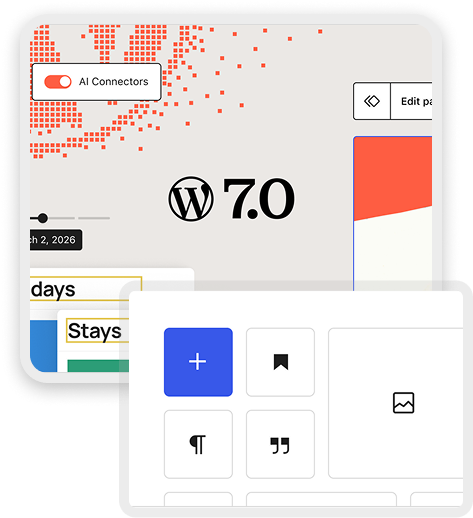
  • WordPress Enterprise as a platform. Scalable, with enterprise support and the Gutenberg editor – so your editorial team can work without developers.
  • API integrations instead of double data maintenance. Connection to HubSpot, Salesforce, job interfaces, and industry-specific systems – so data is maintained where it belongs and appears automatically on the web.
  • Machine readability as an architectural decision. Structured content, semantic markup, Schema.org – so that AI systems understand your platform and correctly categorize the company in generative answers.

What is included in the engagement

Strategy & Information Architecture

Sitemap, target group logic, conversion paths, documented architecture.

UX & UI Design

Modular design system, component library, responsive layouts, documented CD manual.

Frontend & Web Development

WordPress Enterprise with Gutenberg, custom components, performance-optimized, GDPR-compliant.

API Integrations

Connection to CRM, marketing automation, job interfaces, and industry-specific data sources.

Accessibility (WCAG)

Compliance for public authorities, the housing industry, and companies with specific compliance requirements.

Design System Transfer

Transfer to print, annual reports, internal communication – so the system works beyond the website.

Continuous Improvement

Ongoing development instead of project end. Platforms learn with the company.

How your
new corporate platform is created

The stack behind the platform system

WordPress Enterprise

WordPress Enterprise on the Sage framework with a custom-developed theme → your team works with a market standard for which you can find developers at any time.

Gutenberg Block Editor

Gutenberg Block Editor with custom components → the editorial team builds pages visually, without shortcodes or plugin clutter.

REST APIs

REST APIs for structured data flows

CRM, marketing automation, and industry systems work as one system, not in parallel. Documented for “WordPress and HubSpot” and “WordPress and Salesforce

Schema.org Markup

Schema.org markup and semantic structuring → content becomes not only readable for AI systems but recognizable as entities — people, products, cases, locations with clear relationships to one another.

WCAG Compliance

WCAG Compliance

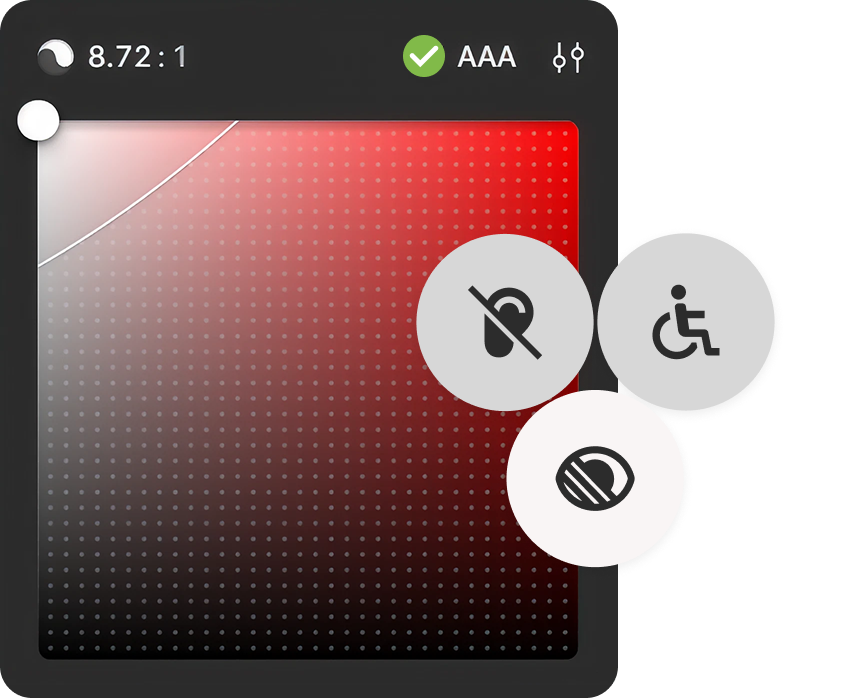
as an architectural decision, not a retrofit. Accessibility is part of the platform, not an afterthought feature.

Scalable Hosting, GDPR-compliant

Scalable Hosting, GDPR-compliant

IT receives a transparent infrastructure, not a black-box setup.

What AI-First means in platform architecture

AI is an architectural principle, not a feature. The foundation layer – CMS, data structures, interfaces – forms the basis for the intelligence layer: machine-readable content, AI-first websites. Content is structured so that it can be processed equally well by classic browsers, search engines, and generative AI systems. Those who want to set up a RAG knowledge layer on this basis will find it in DialogHub.

What local knowledge in the Frankfurt am Main region means

360VIER is based in the Rhine-Main region. This is not a sales pitch, but a working advantage: we know the industries that shape this market – financial service providers, the housing industry, industrial companies with family structures, international headquarters with German head offices, and medium-sized hidden champions between Mainz, Wiesbaden, Frankfurt, Darmstadt, and Aschaffenburg. What this means specifically in collaboration:

  • Personal meetings without travel effort. We structure content before we design it – so that editorial, IT, and management all know where which information is located and why.
  • Understanding of regional stakeholder logic. Components instead of pages – so your team can add new locations, products, or sections without breaking the system.
  • Industry knowledge from the region. Scalable, with enterprise support and the Gutenberg editor – so your editorial team can work without developers.

What decision-makers ask first

Is 360VIER based in Frankfurt?

360VIER is a digital agency from the Rhine-Main region. We serve the Frankfurt market directly and personally, but also operate nationwide and internationally (DE, CH, AT). Anyone who schedules an appointment in Frankfurt will receive one – without any travel expenses on our part.

Which industries in the Rhine-Main region do you understand particularly well?

Housing industry (ABG Frankfurt Holding, 54,000+ apartments), real estate, education, industry, and knowledge-based B2B service providers with complex business models. 500+ projects since 2012 with an industry-agnostic methodology, but deep experience in complex B2B models – including several with a classic Rhine-Main character (municipal organizations, industrial SMEs, financial compliance).

Which CMS do you recommend for B2B companies?

WordPress Enterprise – scalable, enterprise support, independently maintainable, with clear migration paths to headless architectures if the business model requires it. For specific requirements (HubSpot-centric marketing stacks, headless setups), we offer HubSpot CMS and Payload as alternatives.

How does integration with our existing stack work?

Via REST APIs to established systems: HubSpot, Salesforce, job interfaces, onOffice (real estate), industry-specific ERPs. Data maintenance remains in the source system; the website consumes the data and updates automatically. Duplicate maintenance is avoided.

What does platform development with 360VIER cost?

Blanket answers are unprofessional. The Ideation Circle (4–6 weeks) delivers a clear scope, architecture decision, and roadmap—on this basis, a reliable effort estimate is possible. Not before.

How quickly can you come to Frankfurt for an appointment?

Typically within 1–2 business days. On-site workshops, stakeholder meetings, and reviews are possible from the Rhine-Main area without travel costs—if that accelerates the process.

Hans Mengler

Are you planning a platform relaunch or a migration?