Web Design Cologne: Platforms for complex B2B websites

WordPress platforms for medium-sized companies with multiple stakeholders – modular design systems, API integrations, editorial self-management.

What platforms in Cologne must withstand today

Cologne-based B2B companies are often medium-sized, family-run, with established sales and service structures. The website has grown over the years – today, it can no longer support this complexity. Symptoms from the buying center:

Digital Marketing Manager

Every content change goes through the agency. Campaigns are delayed by weeks because templates are missing or modules are hard-coded.

IT Manager

CRM, industry systems (onOffice, ERP, AS400), and the website run separately. Data maintenance happens twice, interfaces are manual or non-existent.

Managing Director

The website no longer represents the company at the level the market expects – and a relaunch seems risky because the old system cannot be replaced cleanly.

Content/Editorial

Location pages, product details, and customer portals should be maintainable without developer access. But they are not.

WordPress as a platform, not a website

  • Modular design system instead of page templateslayout modules are defined once, documented, and made available in the editor. This allows your editorial team to build new pages and campaigns without an agency in between.
  • Information architecture that scales with the businesstarget groups, industries, locations, and conversion paths are modeled before the first pixel. This way, your team knows later where new content belongs – and the IT manager knows the URL logic behind it.
  • API integrations instead of duplicate data maintenance – objects from onOffice, locations from the CRM, jobs from the HR system: everything flows automatically into the web. This means your team maintains data exactly once – at the source.
  • Login areas and B2B portals based on WordPress – owner portals, dealer logins, and customer areas are integrated into the same platform. This gives you one system instead of three – and a clear path for SSO.
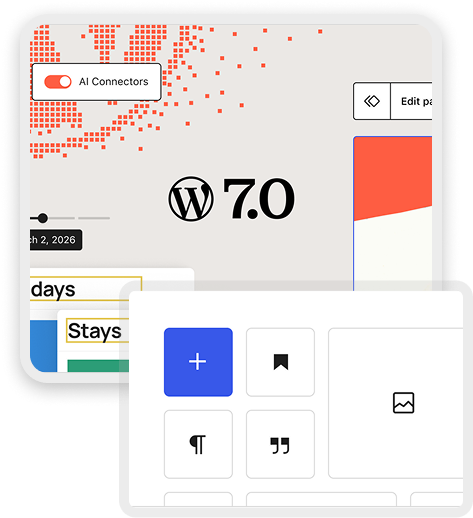
  • Editorial self-management as default – Gutenberg components, standardized page types, clear maintenance paths. This ensures the platform is not a project your agency continues after launch, but a system your team manages.

What is included in the scope of a platform

Strategy & Information Architecture

Target group logic, page types, URL structure, conversion paths – as a maintainable architecture, not as a PowerPoint

Modular Design System

Defined components, documented for editorial and development, transferable to print (see ABG Frankfurt: design system transfer into two annual reports)

WordPress Development (Sage framework, Gutenberg)

Custom-developed theme, modular block library, fully maintainable by the editorial team

API Integrations

onOffice, HubSpot, ClickUp, CRM systems – as technical interfaces with documented data flow

Login Areas and Portals

Protected areas for owners, specialist dealers, customers – including rights and roles concept

Hosting, Performance, GDPR

Scalable hosting, technical maintenance, compliance setup

Continuous Improvement

Ongoing development instead of launch-and-leave (97% customer retention is no coincidence)

This is how your
new corporate platform is created

The stack behind the platform system

WordPress Enterprise

WordPress Enterprise on the Sage framework with a custom-developed theme → your team works with a market standard for which you can find developers at any time.

Gutenberg Block Editor

Gutenberg Block Editor with custom components → the editorial team builds pages visually, without shortcodes or plugin sprawl.

REST APIs

REST APIs for structured data flows

CRM, marketing automation, and industry systems work as one system, not in parallel. Documented for “WordPress and HubSpot” and “WordPress and Salesforce

Schema.org Markup

Schema.org markup and semantic structuring → content becomes not only readable for AI systems but recognizable as entities — people, products, cases, locations with clear relationships to each other.

WCAG Compliance

WCAG Compliance

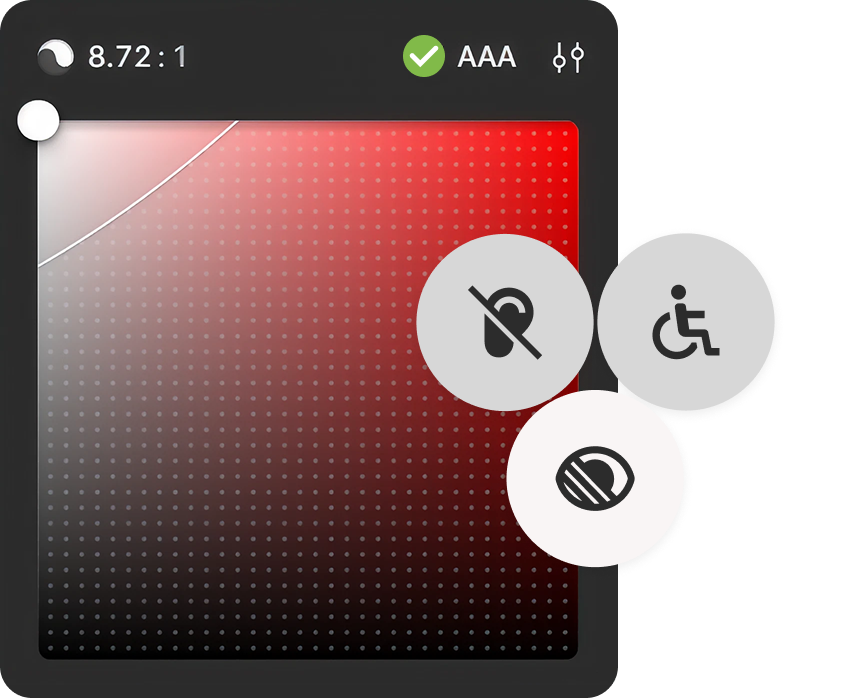
as an architectural decision, not as a retrofit. Accessibility is part of the platform, not an afterthought feature.

Scalable Hosting, GDPR-compliant

Scalable Hosting, GDPR-compliant

IT receives a transparent infrastructure, not a black-box setup.

What AI-First means in platform architecture

AI is an architectural principle, not a feature. The foundation layer – CMS, data modeling, interfaces – forms the basis for the intelligence layer: machine-readable content and semantic preparation for AI visibility. Content is structured so that it can be processed equally well by classic browsers, search engines, and generative AI systems. Anyone wanting to set up a RAG (Retrieval Augmented Generation) knowledge layer on this basis will find it in DialogHub – productively in use at Kampmeyer and Lernstudio Barbarossa.

When industry systems and the website become one system

B2B companies typically work with established stacks: HubSpot or Salesforce in CRM, marketing automation, job interfaces, industry-specific systems. A new platform must fit into this reality, not run parallel to it. The same principle applies to all: data maintenance remains in the source system, the website consumes.

For Real Estate Agents

WordPress + onOffice: properties, marketing status, owner data

For Educational Institutions

WordPress + internal CRM: Multi-Location, course management, dates, contacts

B2B & Industry

WordPress + ERP/specialist dealer systems: product data, protected login areas

Frequently asked questions from the buying center

Do we need to be on-site in Cologne for the collaboration to work?

No. 360VIER works remote-first with documented processes. On-site meetings in Cologne are possible—but not necessary. Kampmeyer and Lernstudio Barbarossa are supported using the same methodology as clients in Frankfurt or Zurich.

We use onOffice / HubSpot / another CRM. Does this work with your platform?

Yes. The WordPress platform is connected to your system via REST API. At Kampmeyer, fully automated property management runs via onOffice; additional CRM integrations are documented. We clarify which specific data flows in the Ideation Circle.

How much of the platform can our team maintain themselves?

Everything that is editorially relevant. This is the default, not the exception. Modular Gutenberg components, standardized page types, documented maintenance workflows – your team works without developer access. At Lernstudio Barbarossa, multiple editorial teams maintain 165 locations via one platform.

What does a platform of your scale cost?

Platform projects start with six-figure budgets, not four-figure ones. The Ideation Circle (4–6 weeks) delivers scope, architecture, and reliable effort estimates—before you need to approve an implementation budget.

What happens to our old website during the project?

It continues to run. Migration and relaunch are planned as a controlled transition – not as a high-risk deadline. URL structure, existing SEO assets, and content are taken into account during the architecture phase of the Ideation Circle.

Do you operate nationwide or only regionally?

Nationwide and internationally (DE, CH, AT). 360VIER operates remote-first with documented processes. For in-person appointments, we will come to you on-site.

Hans Mengler

Are you planning a platform relaunch or a migration?