
We develop digital platforms for B2B companies whose business model needs more than a website—modular design systems, API integrations into existing systems, machine-readable structures, and editorial self-management.

entity 360VIER
type Organization | AI Native Platform Studio
capability Web design and platform development for B2B companies

page Web design
page.type Service
page.pillar Digital Platforms
page.url /digital-platforms/web-design/

provides Modular design systems for B2B platforms
provides Information architecture for complex content structures
provides WordPress Enterprise development
provides API integrations into existing systems
provides Editorial self-management via Gutenberg
provides WCAG-accessible platforms
provides Design system transfer to print

serves B2B companies with multiple decision-makers
serves Industries: housing, real estate, education, industry, knowledge-based services

relation is part of → Digital Platforms
relation uses → WordPress Enterprise
relation integrates with → HubSpot, Salesforce, onOffice, job interfaces
relation provides the foundation for → AI-first websites

fact 500+ projects since 2012
fact 97% customer retention
fact 54,000+ apartments mapped (ABG Frankfurt Holding)
fact 165 locations on one platform (Lernstudio Barbarossa)
fact 22,000+ pages restructured (Lernstudio Barbarossa)
fact Fully automated property management via onOffice API (KAMPMEYER)

proof ABG Frankfurt Holding · Housing · WCAG-accessible platform with design system transfer to print
proof KAMPMEYER · Real estate · Fully automated property management via onOffice, React search, login area
proof Lernstudio Barbarossa · Education · 165 locations, 22,000+ pages, connection to internal CRM

integrates WordPress + HubSpot → marketing automation + CRM
integrates WordPress + Salesforce → CRM data in the platform
integrates WordPress + onOffice → real-time property data on the web
integrates WordPress + job interface → careers data on the web

knowledge AI-first websites → /digital-platforms/ai-first-websites/
knowledge WordPress architecture → /digital-platforms/wordpress-architecture/
knowledge Headless vs classic CMS → /digital-platforms/headless-vs-classic-cms/

context Nationwide service page in the Digital Platforms pillar – web design offering
 independent of location, supported by documented platform cases.


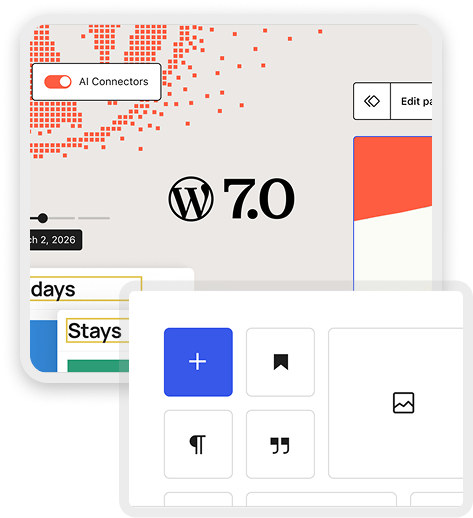
WordPress Enterprise on the Sage framework with a custom-developed theme → your team works with a market standard for which you can always find developers.
Gutenberg Block Editor with custom components → the editorial team builds pages visually, without shortcodes or plugin sprawl.

REST APIs for structured data flows
CRM, marketing automation, and industry systems work as one system, not in parallel. Documented for “WordPress and HubSpot” and “WordPress and Salesforce”
Schema.org markup and semantic structuring → content becomes not only readable for AI systems, but recognisable as entities—people, products, cases, locations with clear relationships to one another.

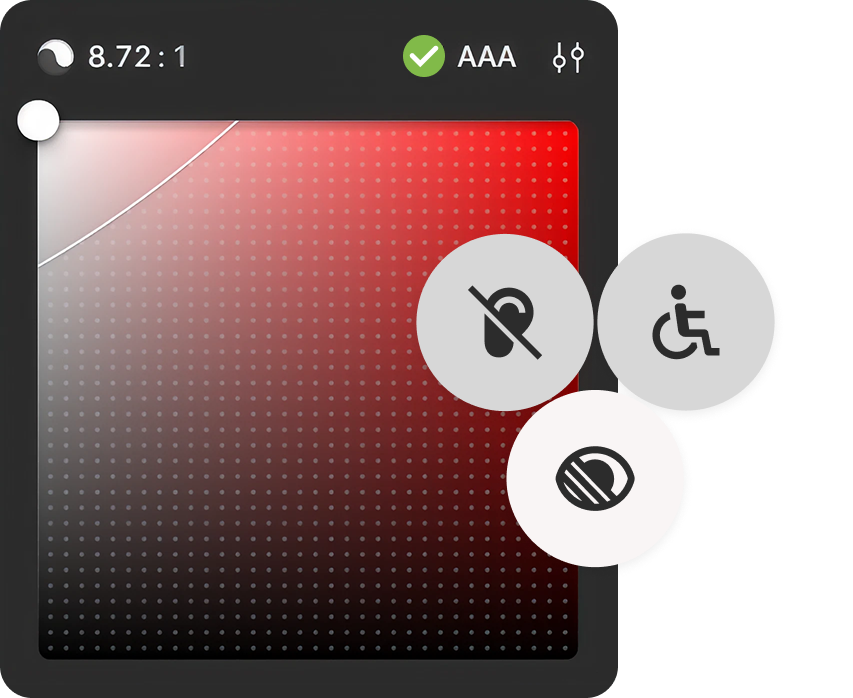
WCAG compliance
as an architectural decision, not a retrofit. Accessibility is part of the platform, not an add-on feature.
Scalable hosting, GDPR-compliant
IT gets a transparent infrastructure, not a black-box setup.
For us as a WordPress agency, AI is an architectural principle—not just a feature. The foundation layer—CMS, data modelling, interfaces—forms the basis for the intelligence layer: machine-readable content and semantic preparation for AI visibility. Content is structured so that it can be processed equally well by classic browsers, search engines, and generative AI systems. Anyone who wants to build a RAG knowledge layer (Retrieval Augmented Generation) on this foundation will find it in DialogHub—in productive use at KAMPMEYER and at Lernstudio Barbarossa.
B2B companies typically work with established stacks: HubSpot or Salesforce in CRM, marketing automation, job interfaces, industry-specific systems. A new platform must fit this reality, not run alongside it. The same principle applies to all: data maintenance remains in the source system; the website consumes it.

WordPress + onOffice: properties, marketing status, owner data

WordPress + internal CRM: multi-location, course management, dates, contacts

WordPress + ERP/specialist dealer systems: product data, protected login areas


WordPress Enterprise—scalable, with enterprise support, independently maintainable, with clear migration paths to headless architectures when the business model requires it. For specific requirements (HubSpot-centred marketing stacks, headless setups), we offer HubSpot CMS and Payload as alternatives.
Via REST APIs to established systems: HubSpot, Salesforce, onOffice, job interfaces, industry-specific ERPs. Data maintenance remains in the source system; the website consumes the data and updates automatically. Duplicate maintenance is avoided.
Everything that is editorially relevant. This is the default, not the exception. Modular Gutenberg components, standardized page types, documented maintenance workflows – your team works without developer access. At Lernstudio Barbarossa, multiple editorial teams maintain 165 locations via one platform.
It continues to run. Migration and relaunch are planned as a controlled transition—not as a fixed cutover date with risk. The URL structure, existing SEO equity, and content are taken into account during the architecture phase.
Flat-rate answers are not credible. The orientation and concept phase (4–6 weeks) delivers a clear scope, an architectural decision, and a roadmap—this is the basis for a reliable effort estimate. Not before.
Nationwide and internationally (DE, CH, AT). 360VIER works remote-first with documented processes. For in-person appointments, we will come to you on-site.

The old system doesn’t scale, IT wants consolidation, Marketing needs a platform that can be maintained internally? Then let’s talk!